
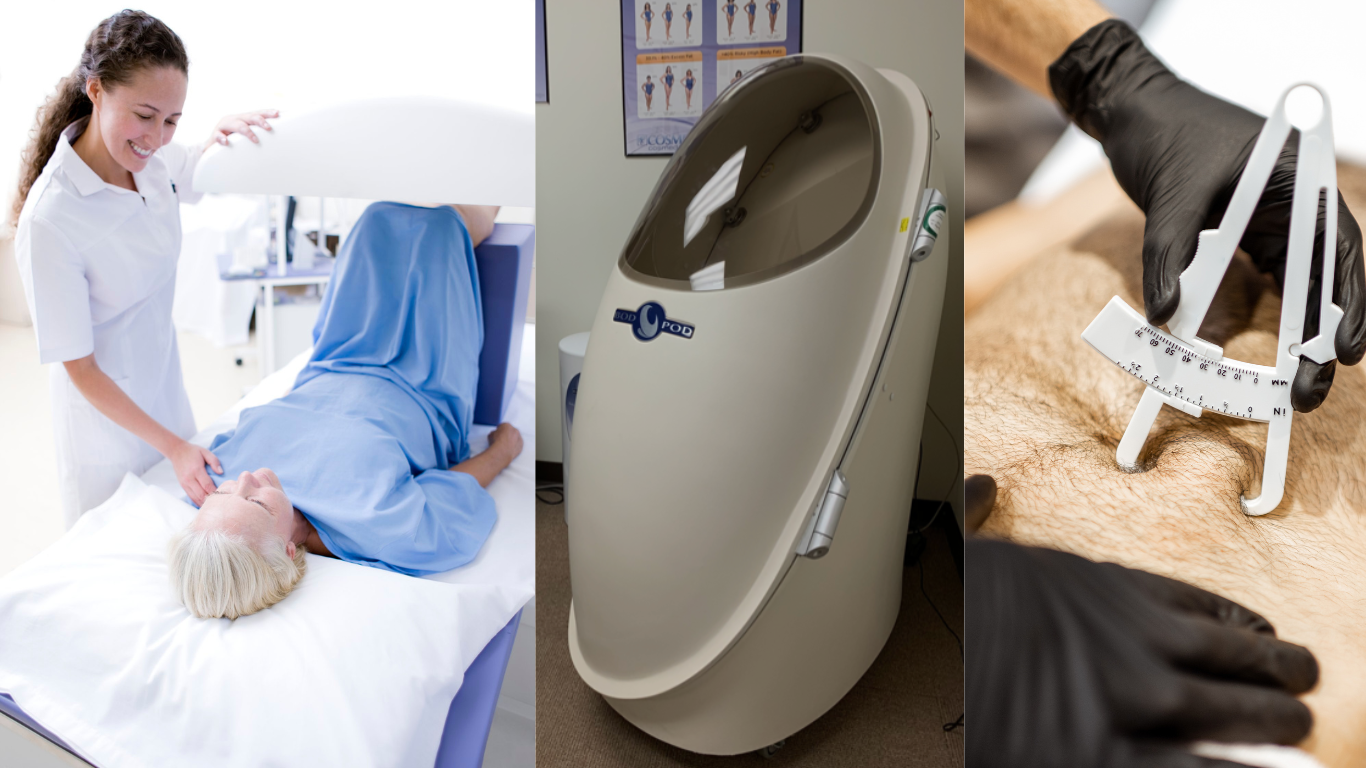
Body Composition Testing
It is important to test your body composition at least 1 time per year, and 4+ times per year if you are trying to lose body fat or increase muscle definition.
There are many benefits to knowing how much body fat and muscle you have that your doctor can't and won't measure for you:
Muscle is the currency of longevity and begins to decline yearly after age 30, unless you do action steps to maintain/increase it.
More muscle = better blood sugar control
More muscle = healthier blood pressure
Knowing how many pounds of muscle you have allows you to:
Accurately calculate your per meal maximum amount of protein you can absorb without suffering the fat gaining consequences of over consuming protein
Accurately calculate your daily protein intake needs to maintain your muscle or increase how much you have/burn body fat
Accurately calculate your fats, carbs, fiber, and calorie targets
Knowing your body fat % is the most accurate way to assess if your body weight is healthy, overweight, or obese vs the Body Mass Index (BMI) used for kids
Allows you to set realistic and achievable goals for fat loss or muscle gain
Lowering your body fat % reduces your risk of getting/improve the following conditions:
High blood pressure
Cardiovascular Disease
Coronary Artery Disease
Prediabetes
Type II diabetes
Asthma
Sleep apnea
Joint pain/osteoarthritis
Gallstones
Lower self-esteem
Bullying
Premature death
13 kinds of cancer
How do I measure my body composition myself at home or a lab?
At home body composition testing
Circumferences (Click here to learn how to DIY these)
Bioelectrical impedance bathroom scales, gym scales, handheld devices (10-15% error)
Lab body composition testing
Bodpod (1% error)
This 2 minute, effortless test, measures changes in pressure when you are inside the chamber compared to an empty chamber. From these pressure changes, the difference of volume of air you are displacing and your total body volume is calculated.
Click here to schedule this at a local lab near you
Underwater (hydrostatic) weighing (1.5% error)
Based on the Archimedes Principle stating that the buoyant force placed on a submerged object (you), is equal to the weight of the fluid displaced by the object.
You get weighed on land first and in the water, the difference being your total number of pounds of fat on the surface and around your organs.
The test involves the participant being lowered into a water tank until all body parts are emerged, expelling all the air from the lungs, then weighed.
Click here to schedule this at the University of Minnesota Lab
Dual energy x-ray absorptiometry (DEXA) (2.5-3.5% error)
This is a full body low does x-ray scan that shows you your bone density, body fat %, and total muscle mass.
Click here to schedule this at a local lab near you
Skinfold thickness measurements (3-5% error)
Measures your surface body fat as a whole and quantifies how much fat you have in the 7 main locations of fat storage.
Click here to schedule this with me and get a detailed report.
What are the current known measurement standards?
Men
Waist circumference of 40+ for men = obese
6-17.9% = Normal
18-24.9% Body Fat = Overweight
>25% Body Fat = Obese
Women
Waist circumference of 35+ for women = obese
12-24.9% = Normal
25-29.9% Body Fat = Overweight
>30% Body Fat = Obese